
Extraversion is aBig Fivetrait that explains individual’s ability and tendency to explore, interact, and engage with external rewards. This tendency commonly manifests itself inoutgoing,socialbehavior and it’s usually easy to observe.

Extraversion has two known sub-traits (DeYoung, 2016):
- Assertiveness, which refers to incentive reward sensitivity - drive toward goals.
- Enthusiasm, which refers to consummatory reward sensitivity - enjoyment of actual or imagined goal attainment.
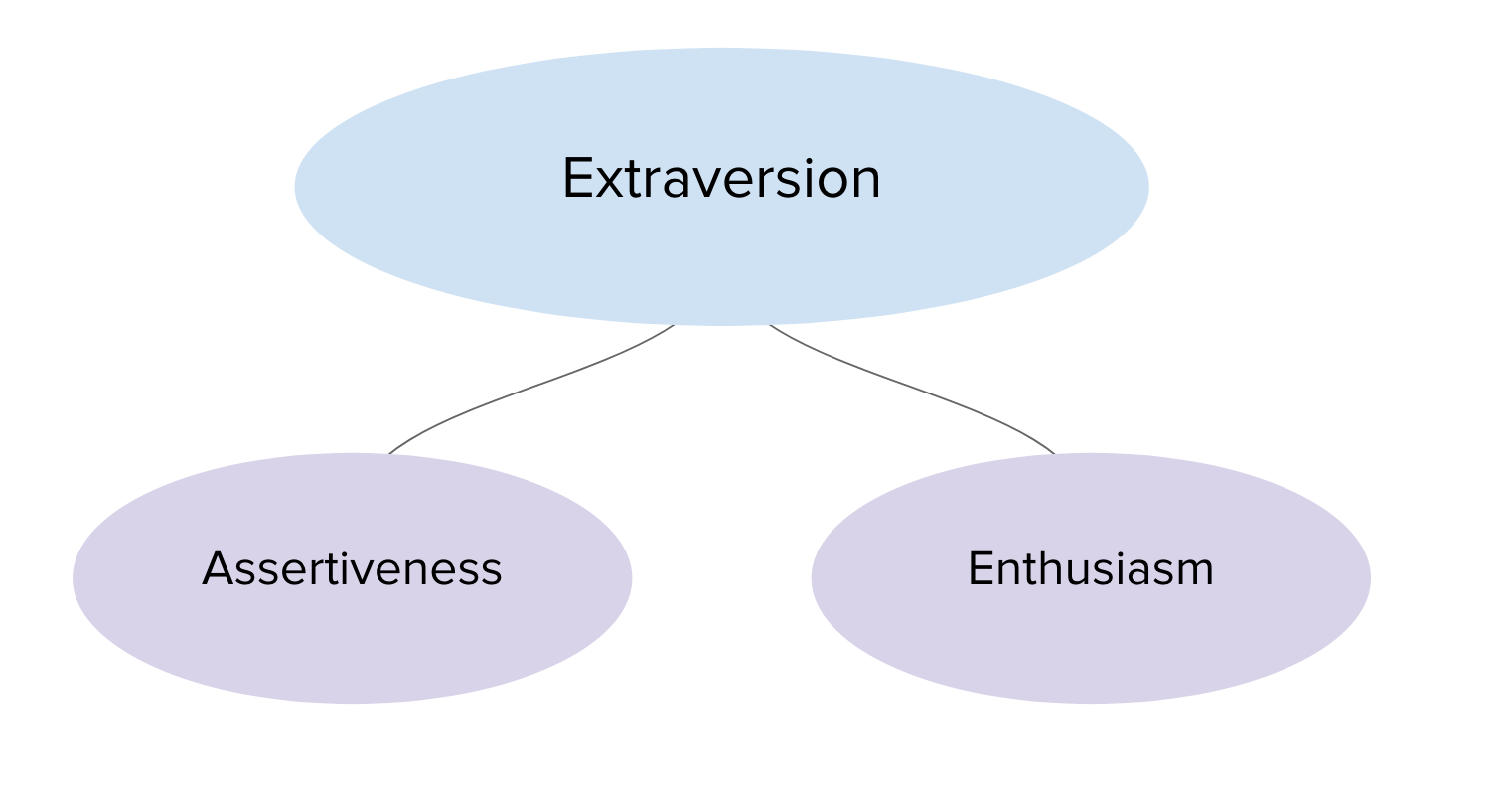
Both Assertiveness and Enthusiasm have been linked to a number of underlying neurobiological causes, some more substantiated than others.
The dopamine system
Dopamine is a chemical that powers your brain’s reward system. When you want a specific reward, your dopamine system is driving the experience.
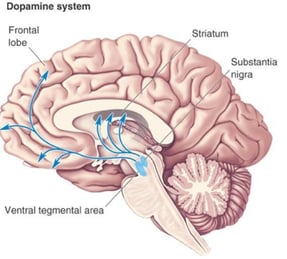
There is significant evidence that people with highly active dopamine systems are more sensitive to external rewards. Their brain truly makes themwantsomething more than others, which can drive assertive behavior.

However, the increasedwantingfor a reward hasnot been found to translate into increasedlikingorpleasurederived from the reward - only the pursuit.
This relationship between Assertiveness and the dopamine system has beenwell-validatedinpharmacological studies,behavior experiments,EEG studies, andneuroimaging research.
The opiate system
Enthusiasm, the component of Extraversion characterized by sociability, gregariousness, and positive emotionality, can be linked to the experience oflikinga reward.

The drive towards a reward (driven by dopamine) is not necessarily enjoyable in itself (we often say that we’re “dying” to get something), but we know that acquiring a reward can be very enjoyable (both in humans and animals).
While researchers have not found a strong association between dopamine levels and these positive feelings, multiple studies suggest that the opiate system may have a strong influence. This hypothesis is not as well-supported as the link between dopamine and Assertiveness, but there somecompelling findingsthat make it very plausible.
If this is true, it means that people who have a higher level of Enthusiasm may have a chemical makeup that causes them tofeel more pleasure from rewardsthan most other people.
Next, we'll go over the neurobiological causes ofAgreeableness.