
The core purpose of Crystal is to help people build stronger, more enjoyable, more effective relationships. We do that with4 Principles.
I'll warn you... they're not tremendously novel, and painfully simple. But they are way too easy to forget.
I use the principles every day because I know that Istruggle with both empathy and emotional competence. The principles guide every significant interaction... like a coach for each conversation, remind me to listen, understand, andconnect.
I'll go through each of them in the post - hopefully they can help you in the same way.
Principle #1: People are wired differently, and we can use personality models to explain those differences.
I partially took this wording fromRay Dalio's principles because it really gets to the core of human chemistry. To understand how anyone lives in the world is to understand differences between people.
The psychologist Carl Jung said,"The meeting of two personalities is like the contact of two chemical substances: if there is any reaction, both are transformed."
Conflict, love, persuasion, trust. Our different wirings lead to unique chemistry for every single relationship. Our personalities, in many ways, shape our destiny.
How can we make sense of human behavior when everyone is so different?
It’s true that people are too complex and their behavior is too nuanced for any single personality type to describe them completely and accurately. However, it’s also true that we tend to act in systematic ways, with certain behaviors predictably correlated to others. That’s where personality models help us.
Are personality models reliable?
Hippocrates and Aristotle developed their own theories of personality more than 2,600 years ago. Many more have been developed in modern times.
While plenty of justified skepticism exists around explicit personality types and labels, there are actually models withextensive scientific validation to back them up, with theFive Factor Model (aka the Big Five) as the leader. DISC andInterpersonal Circumplex focus on the 3 Big Five traits that impact the interpersonal realm -Extraversion,Agreeableness, andConscientiousness.
Beyond the decades of psychological research, we now havepersonality neuroscienceto validate personality models as well.
So, the answer to the question is"Yes, they can be very reliable, but the reliability varies substantially between models."We had to wrestle with this quite a bit in the design of our technology.
Crystal needed to be reliable. To do that, we needed to besystematicenough to accurately categorize behavior with a scientific model, andnuanced enough to capture the differences between how someone sees themselves, how others see them, and how an algorithm might see them.
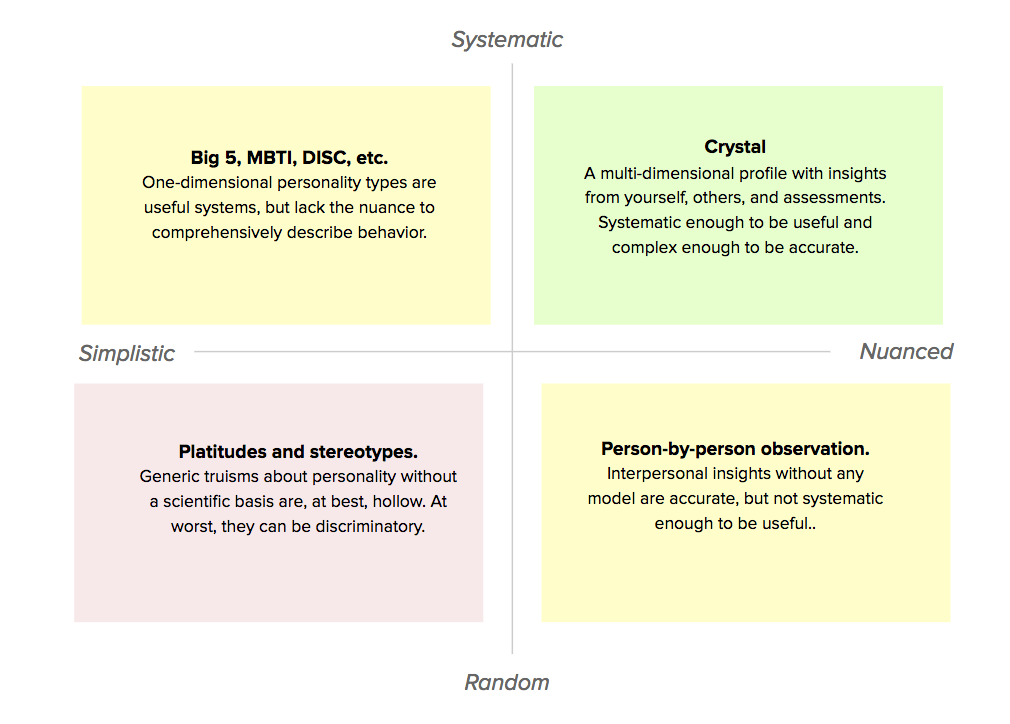
No personality model is perfect, but an accurate one can give us a useful language to describe how we behave, and how we can adapt to each other.
Principle #2: Everyone develops a personality archetype, but can also adapt to other archetypes with skill and effort.
We combined the three frameworks I mentioned - Big Five, DISC, and Interpersonal Circumplex - along with our own independent research to create theCrystal Personality Map.
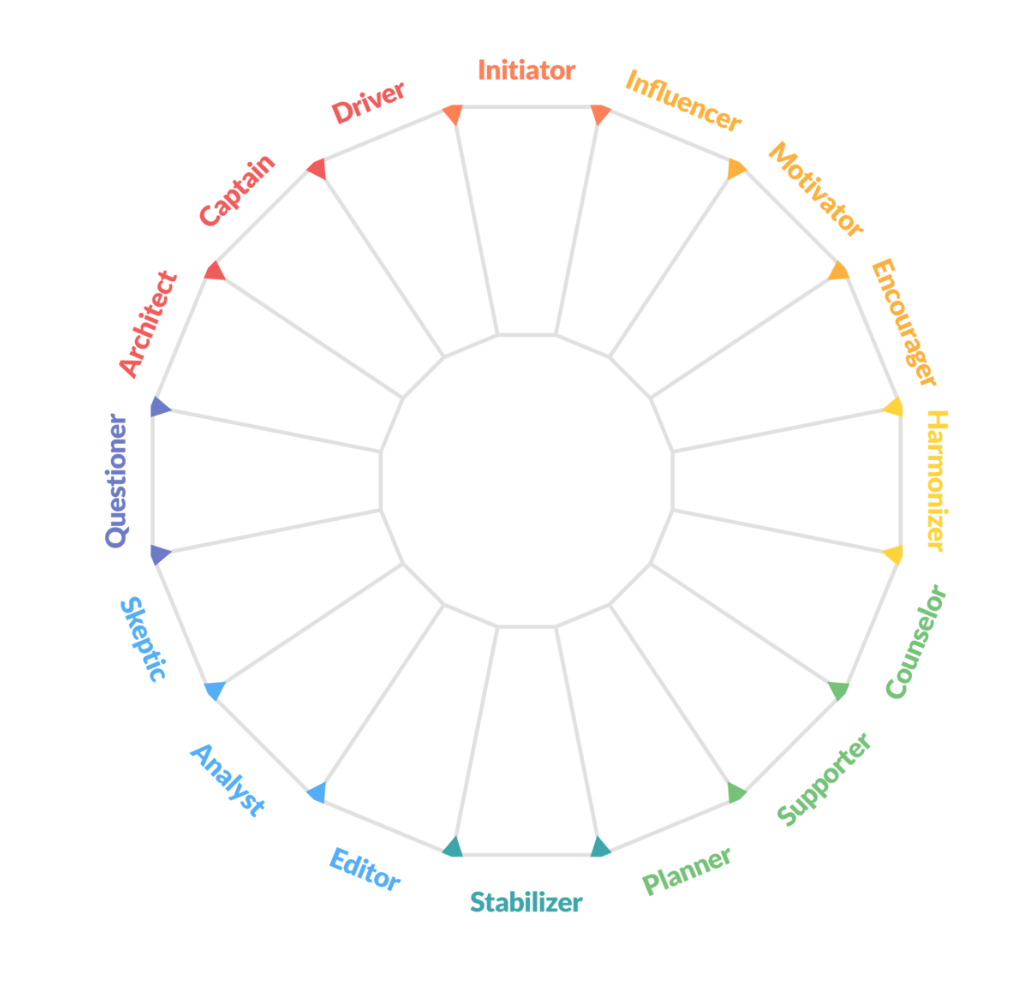
The map is a circle, segmented into 16 archetypes.
Your personality archetypedoes notexplain or predict your personality in every situation.
Your personality archetypedoesdescribe how much or how little energy it takes for you to behave in certain ways.
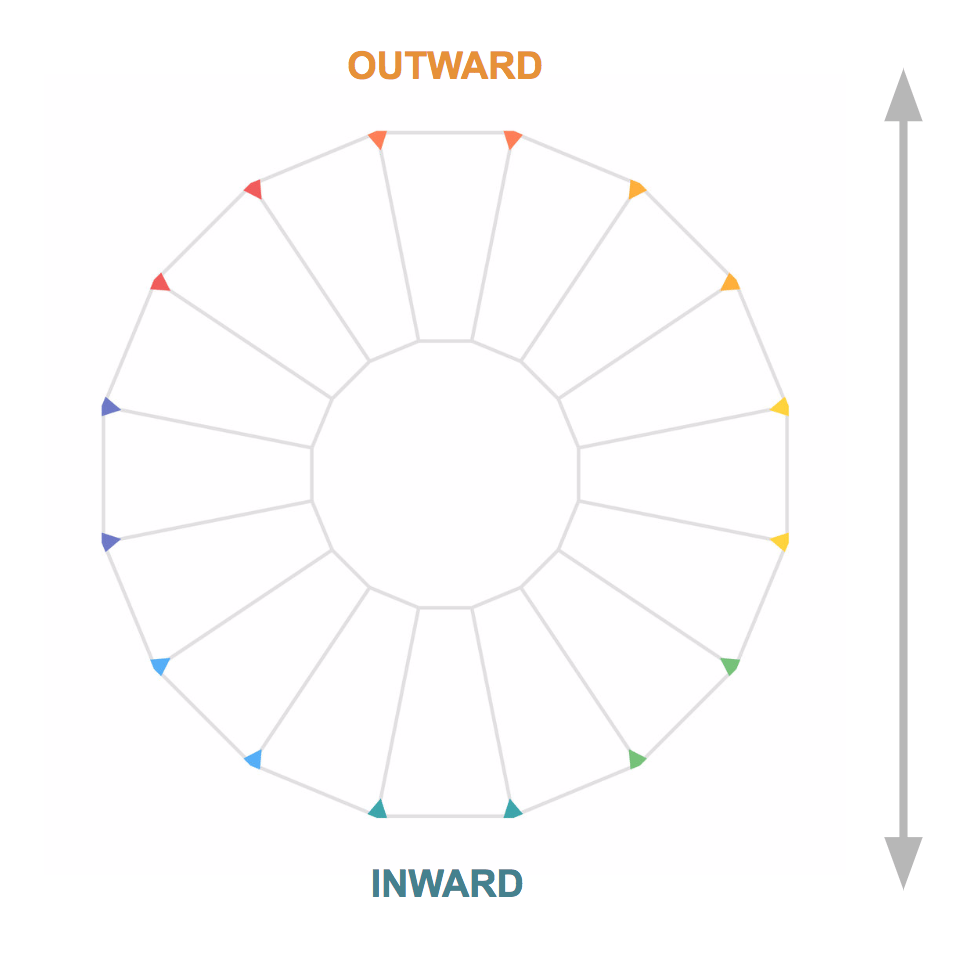
North to South on the map indicates yourEnergy Direction. Energy direction explains how you interact with your environment.
Archetypes in thenorthernregion prefer to direct energyoutwardas they change and shape their environment.
Archetypes in thesouthernregion prefer to direct their energyinwardas they stabilize, structure, and organize their environment.
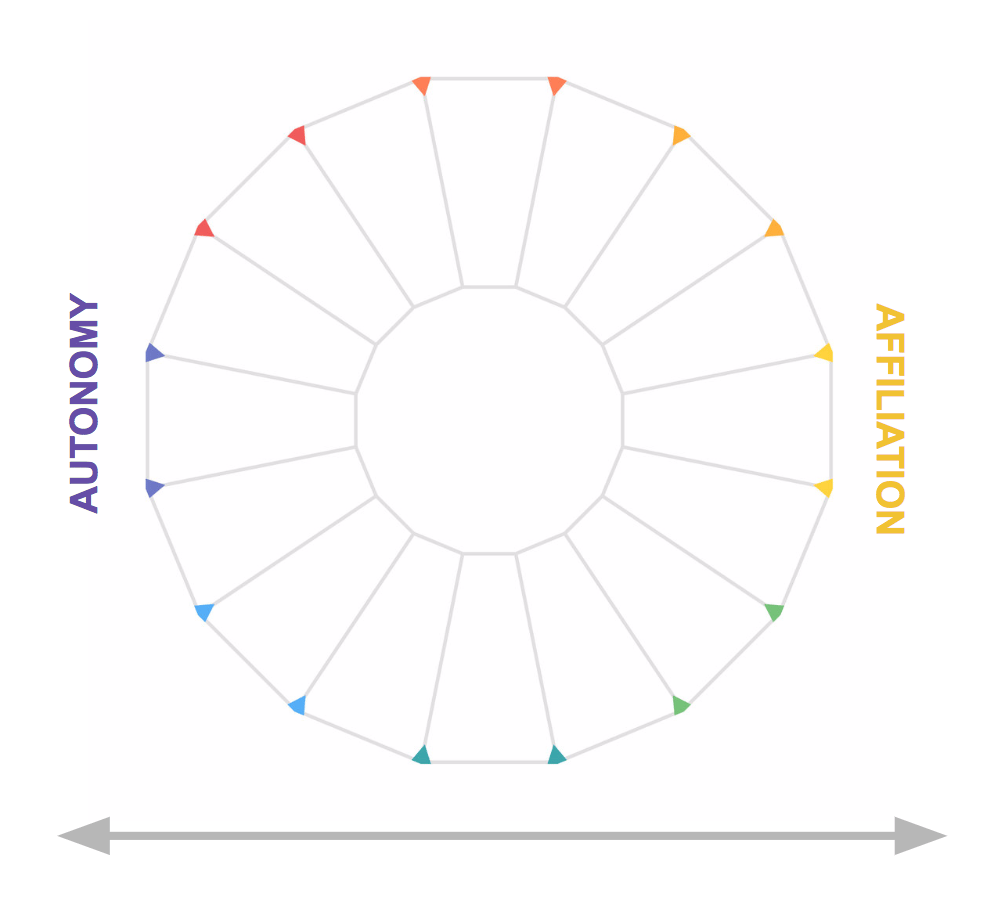
EasttoWeston the map indicates yourEnergy Orientation. Energy orientation explains how you interact with the people around you.
Archetypes in thewesternregion prefer self-initiation and self-direction, seeking autonomy.
Archetypes in theeasternregion prefer connection and engagement with others, seeking affiliation.
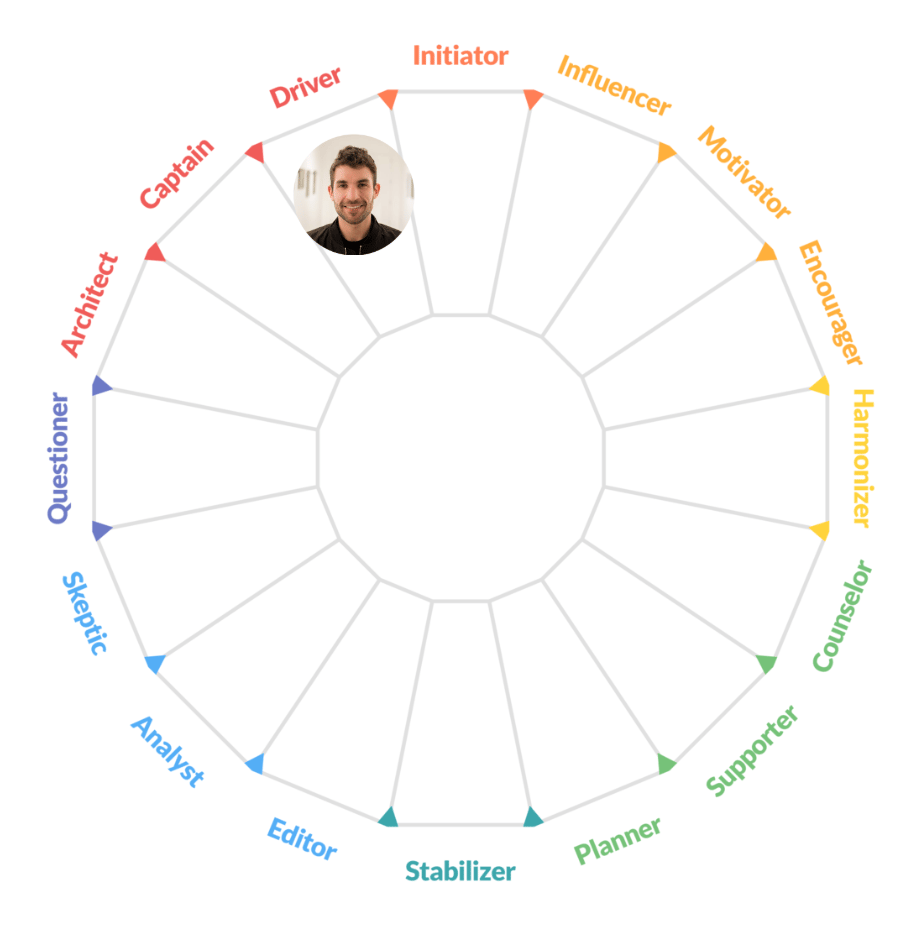
By their mid-twenties, most people have a region on the personality map where they feel most “at home”.
It takes me very little energy to bedirect,initiating, andassertive. But it takes a lot of energy for me to bepractical,analytical, andpatient.
That means my primary archetype is in the upper northwestern region:Driver.
Again, every archetype has strengths and weaknesses, and no archetype is better than another. However, it's critical that you understand where your natural tendencies lie, which leads to the third principle...
Principle #3: Understanding your personality is key to making good choices about your lifestyle, job, and environment.
Because my tendencies fall in thenorthernregion, I know that:
- I will feel burdened with too much structure and too many rules.
- I am very comfortable taking risks.
Because my tendencies also fall in thewesternregion, I know that:
- It will be easier for me to be independent than cooperative.
- I am more comfortable dealing with facts than emotions.
Some situations will require me to shift veryfar from homeon the map, which will take a lot of energy.
With that knowledge, I can choose to put myself in situations that keep meclose to homein my normal routines, so I have the energy to shift when it’s most important.
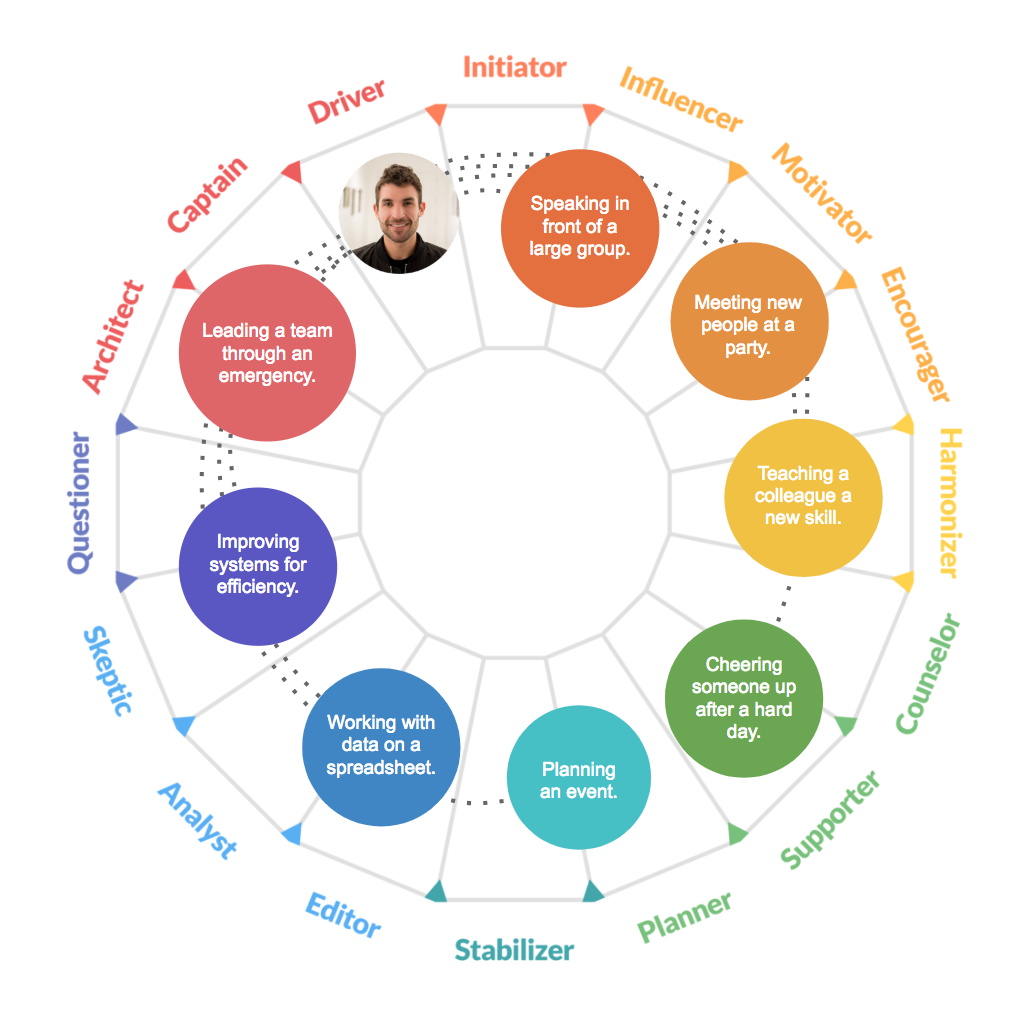
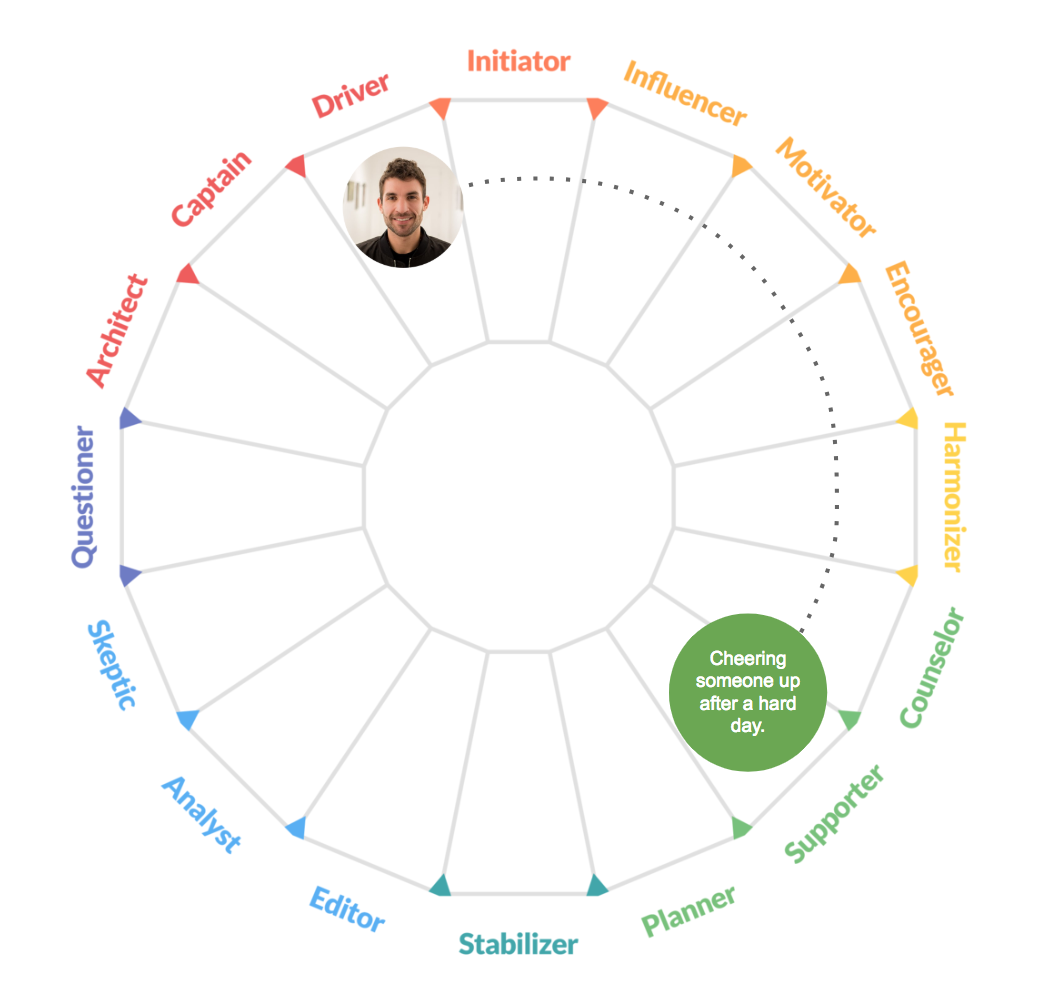
For example, cheering someone up requires me to move a very far distance, to thesoutheastregion.
If I shift to that region too often, I’ll burn out, and I’ll struggle to provide emotional support for my friends and colleagues when they need me.
Since I want to be there for my friends, I can choose to work in a job that keeps me in thenorthwestmost of the time. Then I’ll have the energy to shift to the southeast when it’s truly important.
Principle #4: Understanding the personalities of others helps to make your relationships more comfortable and more effective.
With shared values, any relationship can work. Because of personality differences, however, some relationships require more effort than others.
On the personality map, we describe relationships with two dimensions:
ComfortandEffectiveness.
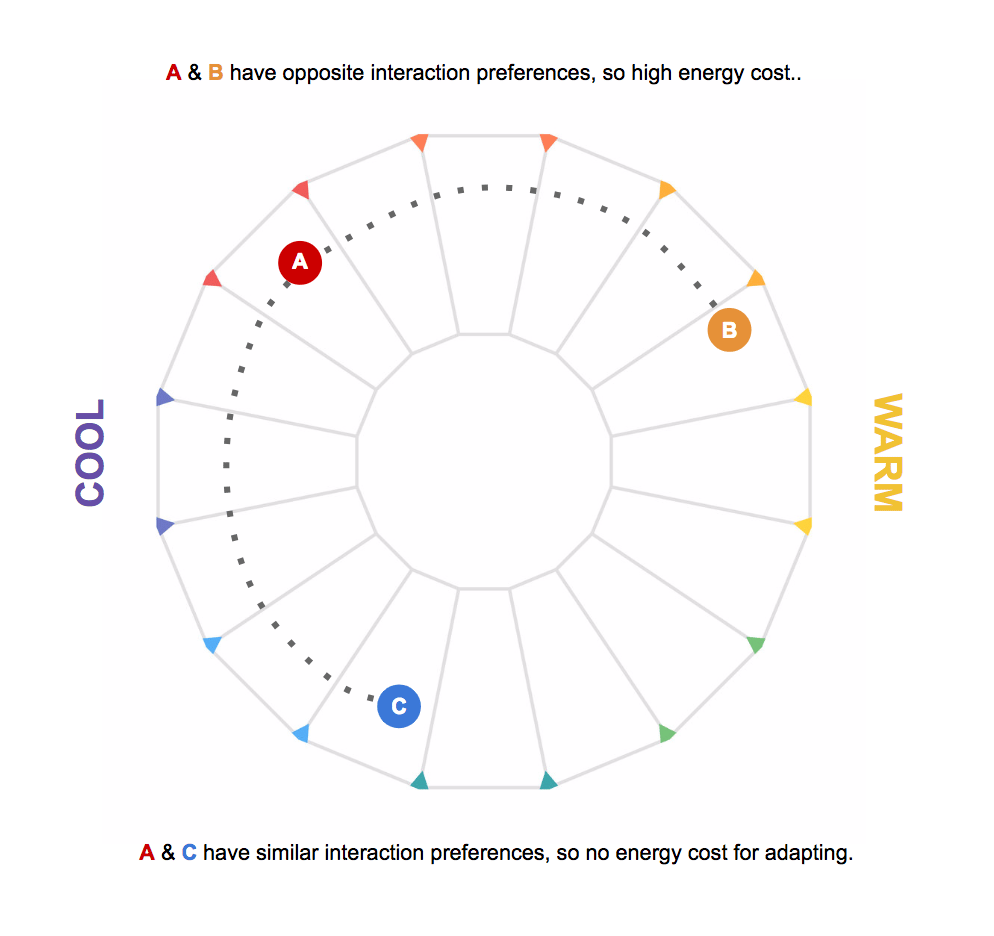
Comfort is determined by a shared orientation towards others and a preference forwarmorcoolinteractions.
Archetypes on west side of the map prefer cool interactions, while those on the east side prefer warm interactions.
So, two archetypes on the same East/West side of the map do not need to expend a lot of energy shifting their style to feel comfortable when they interact.
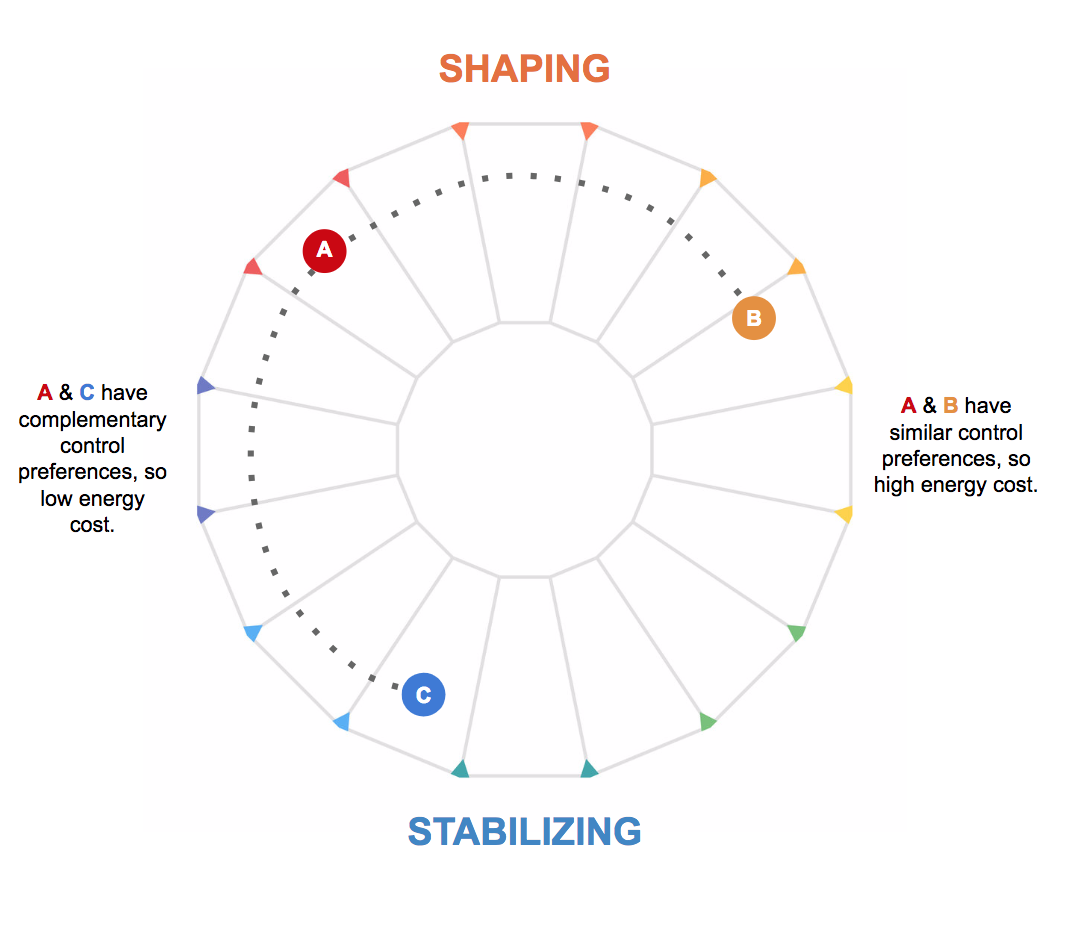
Effectiveness is determined by a complementary preference for control.
Archetypes on north side of the map prefer to control and shape their environment, while those on the south side prefer to stabilize and adapt to their environment.
So, two archetypes on the same North/South side of the map require a high level of energy negotiating control when they work together.
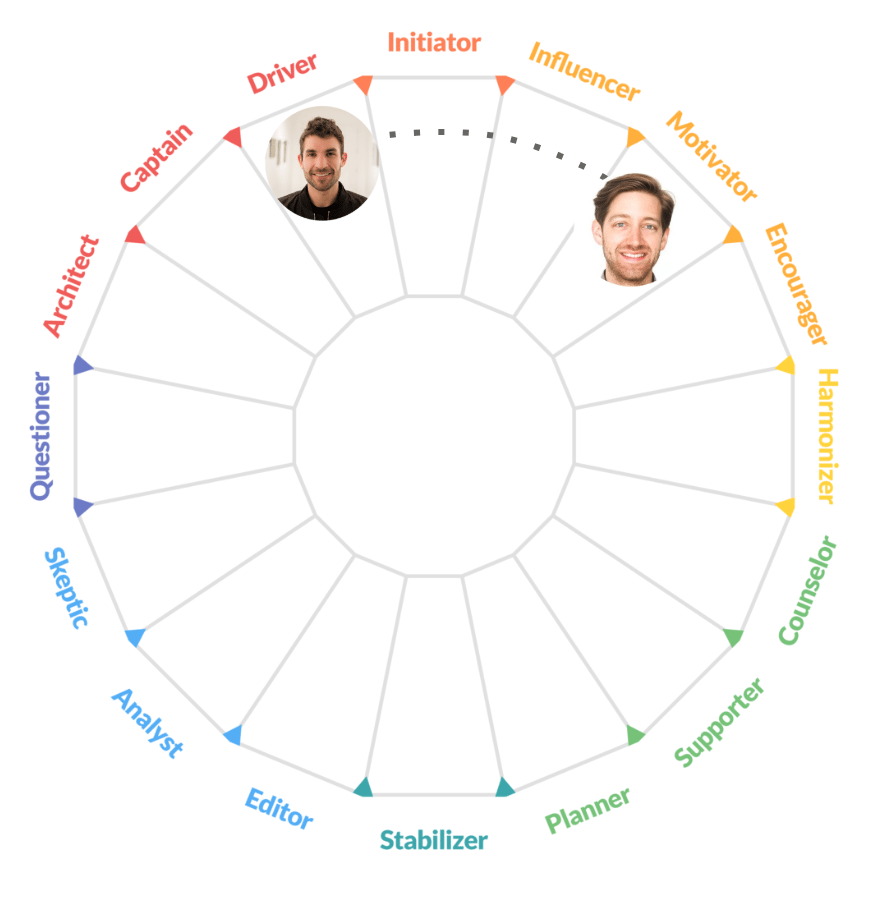
My coworker, Chris, naturally has theMotivatorarchetype, so I know that:
- We both tend to process our thoughts externally, so we can build rapport relatively quickly.
* He is likely to be more expressive with emotions, while I will likely be more direct. - Since we both prefer to shape, change, and control our environment, we may experience conflict when our ideas differ.
- We may have misunderstandings when my desire for autonomy conflicts with his desire for affiliation and connection.
When you understand your differences, you can adapt your behavior to improve the relationship.
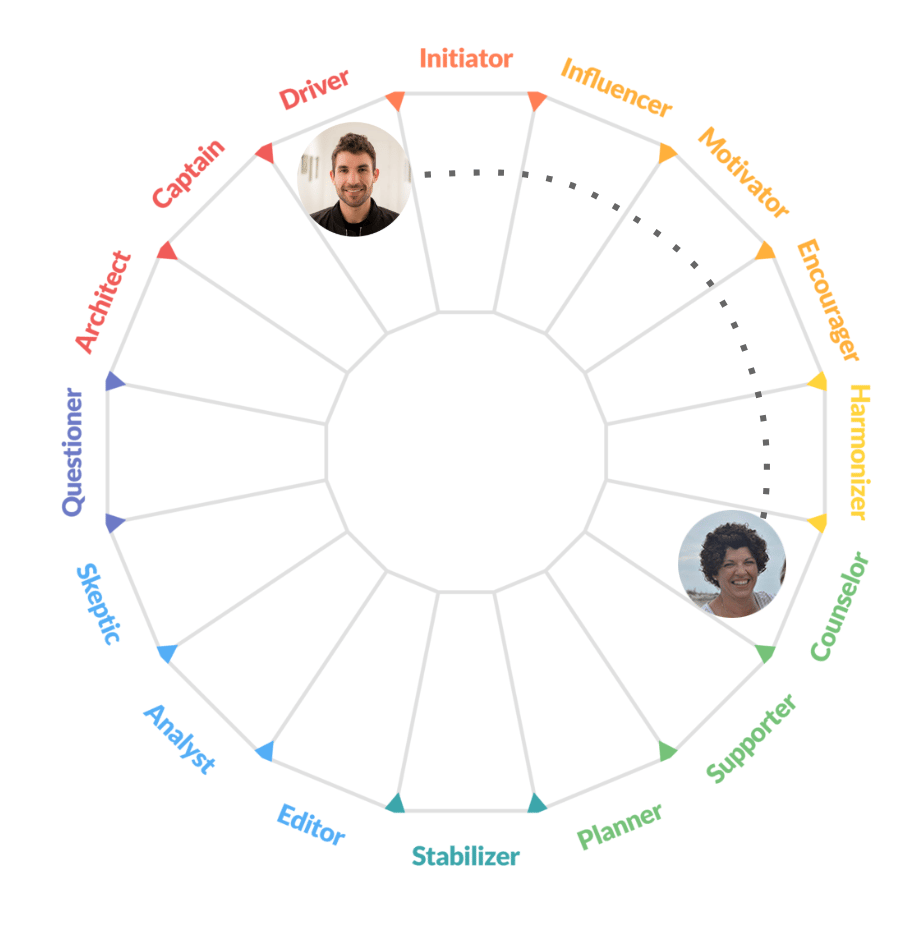
To improve my interactions and relationship with my mom, I can:
- Make sure I clearly communicate my plans and intentions before taking risks.
- Use gentler, more compassionate language than normal when I give her feedback.
- Express my emotions verbally, even when I don’t think it’s necessary.
- Resist the urge to quickly change things before she is ready.
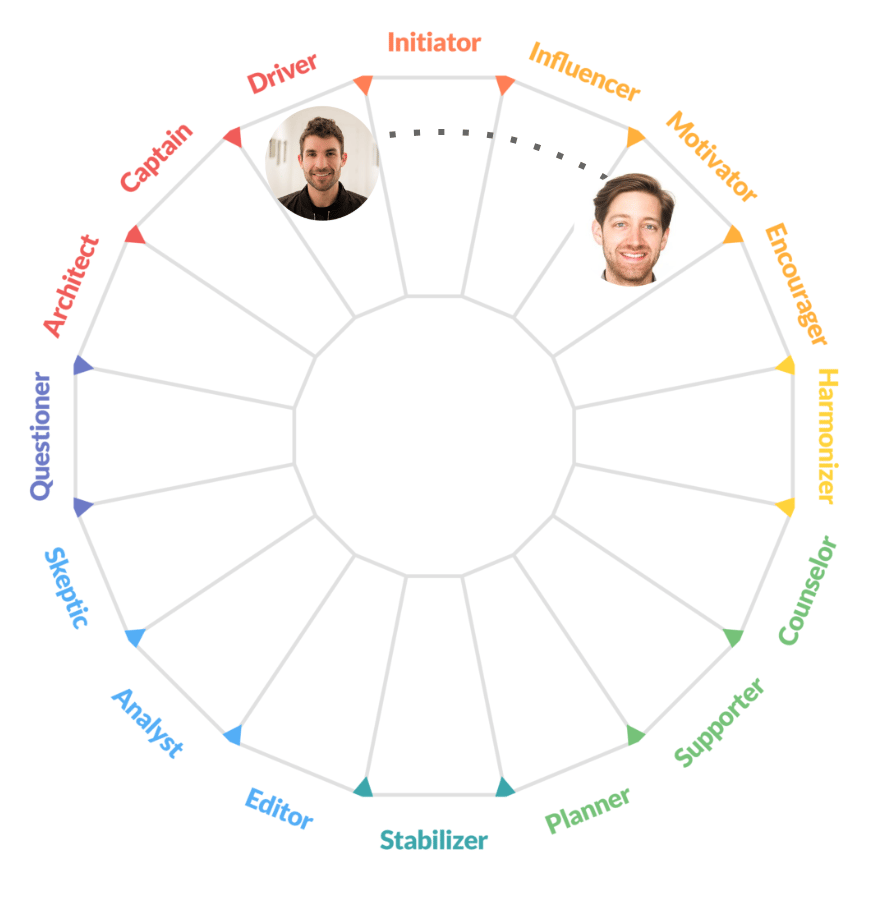
To improve my interactions and relationship with Chris, I can:
- Give him space to experiment and talk through ideas without being overly critical.
- Check in every once and I while to ask how he is feeling, rather than what he is working on.
- Be overly clear that my debates, criticisms, and feedback are not personal in nature.
- Adopt more of a listening role and allow him to take some control and shape conversations.
Shared values give you the willingness to make a relationship work, and the personality map gives you the tools to make it work.