
Neuroticism is aBig Fivetrait that explains an individual’s tendency to experience feelings likeanxiety,fear,anger, andpanic. This trait characterized by sadness, moodiness, and emotional instability. Those low in this trait tend to be more stable and emotionally resilient.
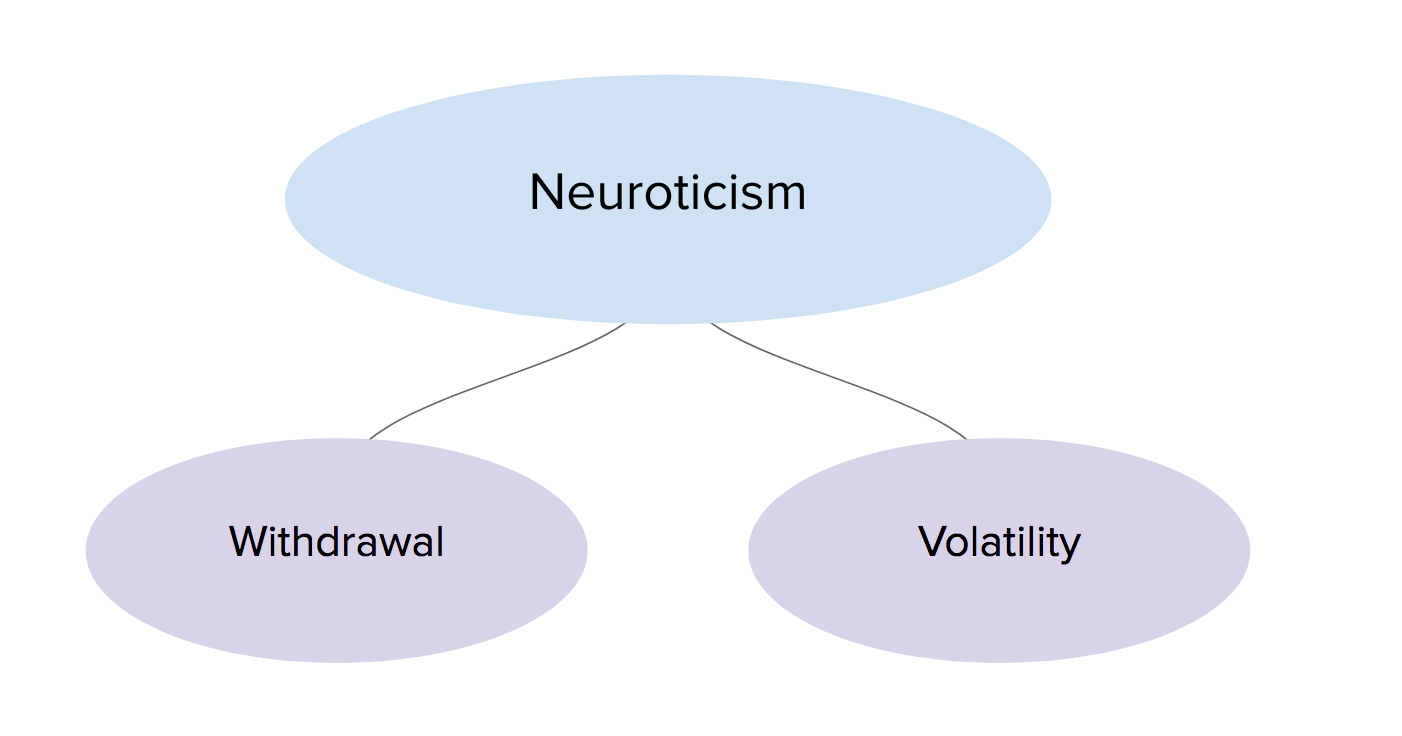
Neuroticism has two known sub-traits (DeYoung, 2016):
- Volatility, which refers to active defense to avoid or eliminate threats..
- Withdrawal, which refers to passive avoidance: inhibition of goals, interpretations, and strategies, in response to uncertainty or error.
Because it is linked to many negative individual and social outcomes, Neuroticism has been studied more extensively than any other Big Five trait, and we have a decent grasp of the underlying causes...
The fight-flight-freeze system
YourFight-flight-freeze System (FFFS)responds to threats with a decision to escape or eliminate the threat.
It's there to protect you (think about how it kicks in if you were to stumble upon a snake as you're hiking in the woods), but it can also respond to threats that are not necessarily dangerous.
The behavioral inhibition system
YourBehavioral Inhibition System (BIS)responds to threats of punishment, confusion, and uncertainty.

Recent studieshave linked Neuroticism to high sensitivity of both of these important defensive systems, which can come as a result oflow serotonin levels.
The HPA Axis
Your HPA (hypothalamic-pituitary-adrenal) axis regulates your body’s response to stress.
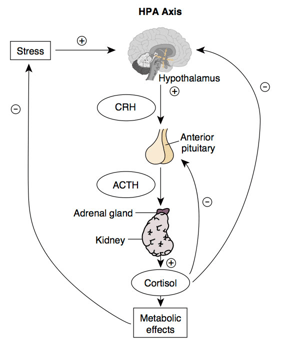
There issubstantial evidencethat links high Neuroticism to a highly active HPA axis.
While the anxiety, stress, and frustration associated with Neuroticism can be tough to deal with day-to-day, there are absolutelyways to reduce its negative effects.