
Conscientiousness is aBig Fivetrait that explains an individual’s ability and tendency to pursue non-immediate goals and follow a set of rules, often manifesting inorderly,methodical,task-focusedbehavior.

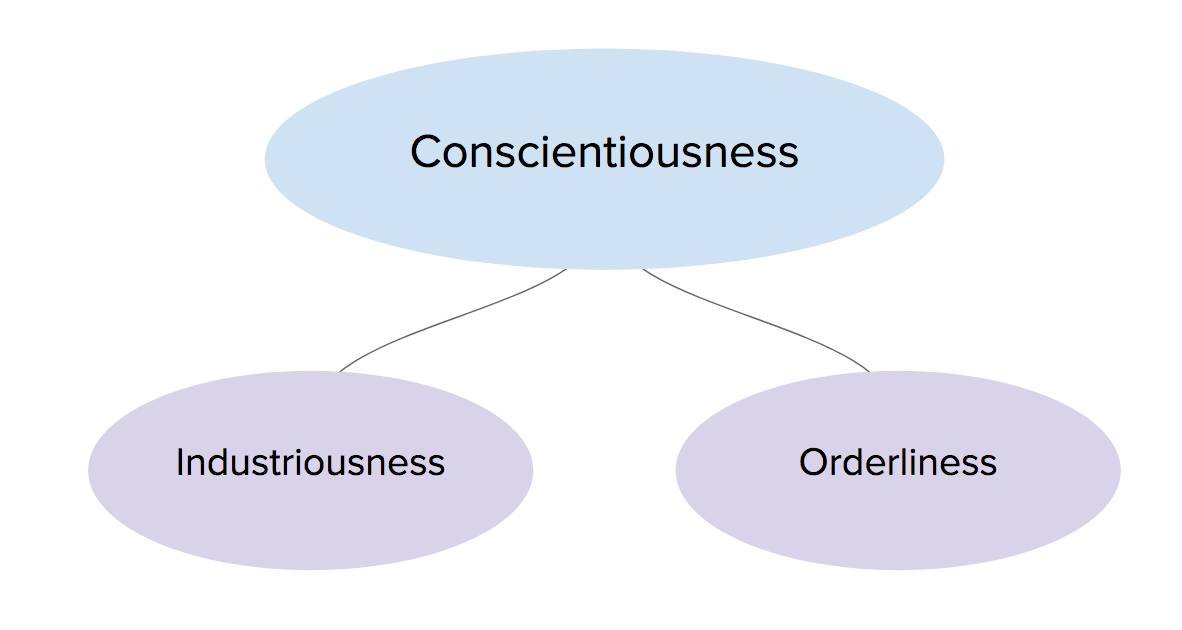
Conscientiousness can be broken down into two sub-traits (DeYoung, 2016):
- Industriousness, which refers to the ability to suppress disruptive impulses and pursue non-immediate goals
- Orderliness, which refers to the ability to adopt and follow rules (either self-imposed or imposed by others).
These aspects of conscientiousness often make it the best psychological predictor of career success, health, and longevity after intelligence. Naturally, researchers have done a lot of work to find out which genetic and environmental factors lead to high conscientiousness.
Neural networks
Your brain hasbillionsof neurons, and many of these neurons are connected in an observablepathway, serving a specific purpose. We call these pathwaysneural networks.
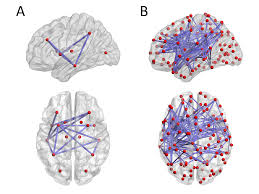
High Conscientiousness has been linked to a greater connectivity between several neural networks in the brain:
The cognitive control networkcontrols yourexecutive functions- attention, planning, working memory, and social behavior.
The salience networkprimarily decides which things you pay attention to andwhich things you ignore.
The prefrontal cortex
The prefrontal cortex (PFC) is a key part of the cognitive control network, and it has a significant impact on Conscientiousness.
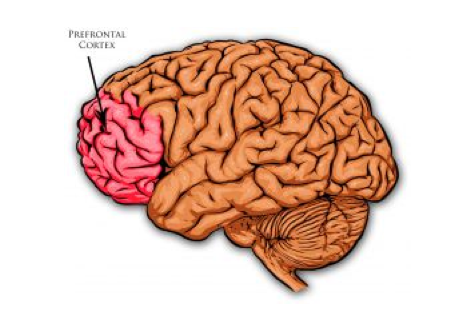
Somestudieshave shown a positive association between volumes of certain regions within the PFC and Conscientiousness - meaning people with higher Conscientiousness are likely to have a slightly larger prefrontal cortex than others.
Conscientiousness, like other traits, is influenced by both genetic and environmental factors. Encouragingly,conscientiousness increases for many peopleas they grow older.
Next, we'll go over the neurobiological causes ofExtraversion.