
Openness is aBig Fivetrait that explains an individual’s tendency to explore and create new experiences, often manifesting incuriosity,imagination,perception, andcreativity.
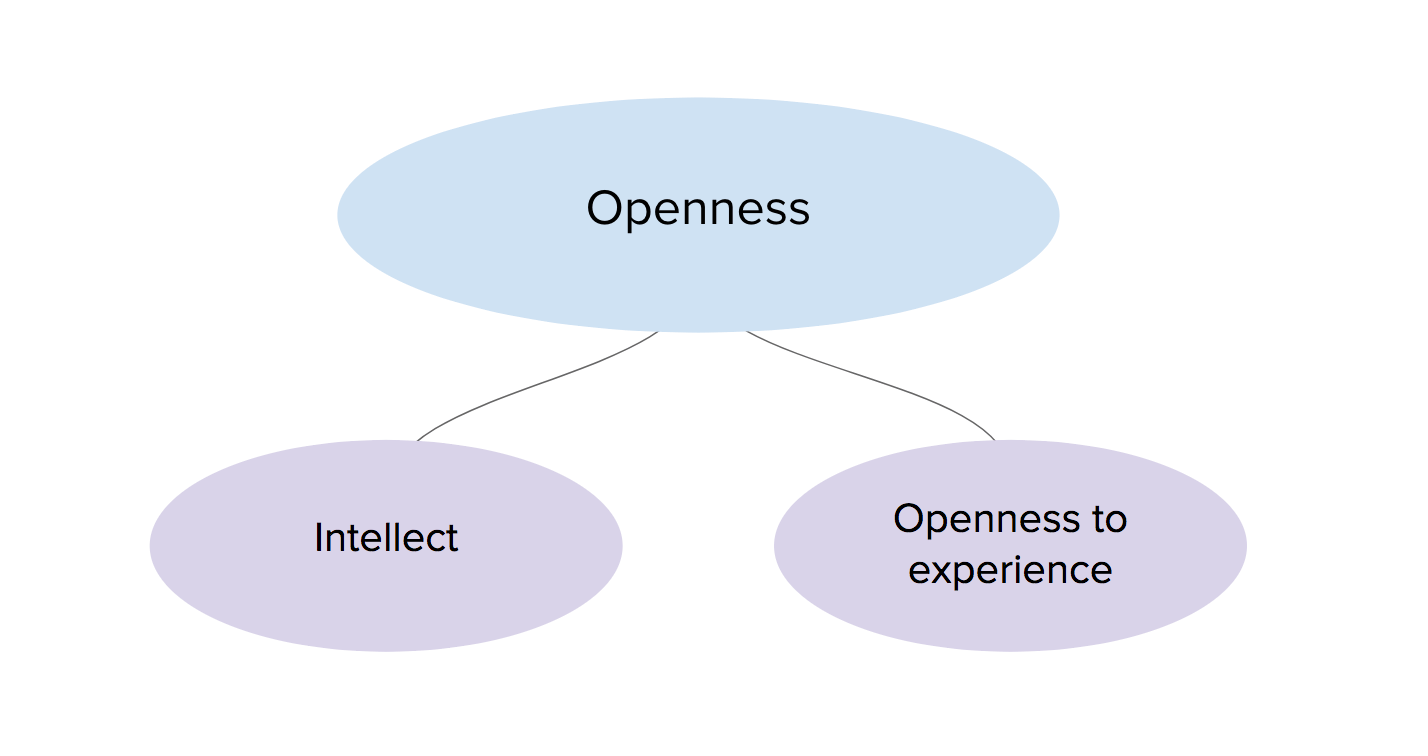
Openness has two known sub-traits (DeYoung, 2016):
- Intellect, which refers to cognitive engagement with abstract information and ideas.
- Openness to experience, which refers to cognitive engagement with perceptual and sensory information.

Overall, there is less known about the underlying causes of Openness than other traits like Extraversion and Neuroticism. We do, however, have a decent undertanding of which brain structures and systems are involved...
Working memory
Openness is the only one of the Big Five traits that ispositively associatedwithworking memoryability.
Your working memory is responsible for holding information temporarily for processing, and it is crucial for guiding your decision-making and behavior.
Dopamine
Dopamine is a neurotransmitter that plays a big role in Extraversion, but also is highly likely to influence Openness. Here's how...
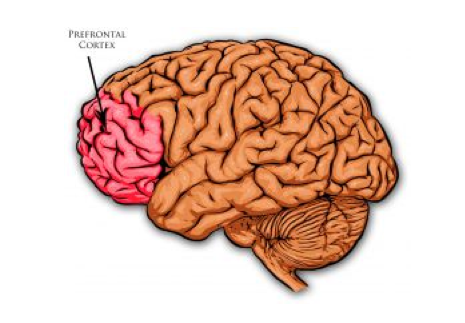
You may have heard of theprefrontal cortexalready. It's the part of your brain that helps you with executive functions -planning,decision-making, andexpressing yourself socially.
Working memory has been linked tohigher dopamine activityin the prefrontal cortex. Thus, it can be also associated with high levels of Openness.
Latent inhibition
Contrary to working memory, Openness is negatively associated withlatent inhibition.
Latent inhibitionexplains what happens when we "get used to" familiar stimuli (sights, tastes, feelings, sounds, smells, routines). When you are familiar with a stimulus, you tend to ignore the details that you would otherwise pay attention to if it was new.
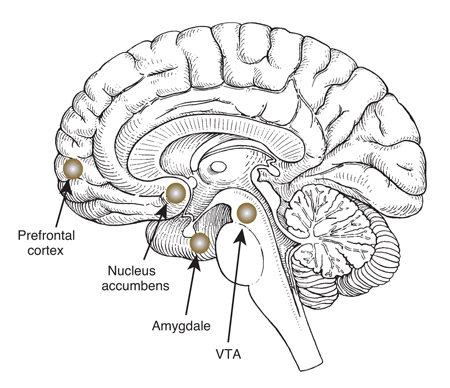
TheVTA (ventral tegmental area)is the region of your brain that is most important for your motivations and internal reward system. High dopamine activity this regionhas been linkedto low latent inhibition, and thus high Openness.
Next, we'll go over the neurobiological causes of Conscientiousness.